
.webp)
.webp)
.webp)
-

- Author e-FILLERS Team
- Dec 3rd, 2025
The Role of Collagen in Regenerative Aesthetics: From Structure to Skin Quality
.webp)
In aesthetic medicine,
collagen is more than just a trending ingredient, it is the structural
backbone of youthful skin. As the main protein in the extracellular matrix,
collagen determines not only skin’s firmness and elasticity but also its
ability to recover from stress and maintain hydration. With the growing focus
on regenerative aesthetics, understanding collagen’s role is essential
for every physician aiming to deliver long-lasting, clinically validated
outcomes.
The
Skin’s Framework
Collagen represents
nearly 30% of the body’s total protein content and provides critical
structure in skin, tendons, and connective tissues. In the dermis, Type I
and Type III collagen dominate, Type I provides tensile strength, while
Type III supports vascular structures and early tissue repair.
Fibroblasts
continuously synthesize collagen, but this process slows dramatically with age.
From the mid-20s, collagen levels decrease by approximately 1% per year,
leading to:
- Visible wrinkles and fine lines
- Loss of firmness and sagging
- Thinner, drier skin with reduced
resilience
External aggressors
like UV radiation, pollution, and oxidative stress accelerate this decline,
making collagen restoration a cornerstone of regenerative treatments.
Regenerative
Aesthetics and Collagen Support
Unlike traditional
aesthetic approaches that focus on temporary correction, regenerative
aesthetics emphasizes biological repair and long-term skin health. Here,
collagen plays a central role:
- Structural regeneration – restoring dermal support to reduce
laxity
- Improved elasticity – enhancing mechanical properties of the
skin
- Enhanced hydration – collagen fibers bind water, supporting
dermal plumpness
- Optimized healing – promoting scar repair and tissue
recovery
By targeting collagen
production and supplementation, regenerative aesthetics provides results that
go beyond surface improvements.
Marine
Collagen: A New Era in Treatment
Traditional collagen
sources (bovine, porcine, human-derived) have limitations such as allergenic
risks, cultural barriers, and lower bioavailability. Marine collagen,
particularly from arctic cod, offers distinct advantages:
- High bioavailability thanks to lower molecular weight
- No allergy testing required
- Superior purity via HPCT purification technology
- Sustainable sourcing, supporting eco-conscious practice
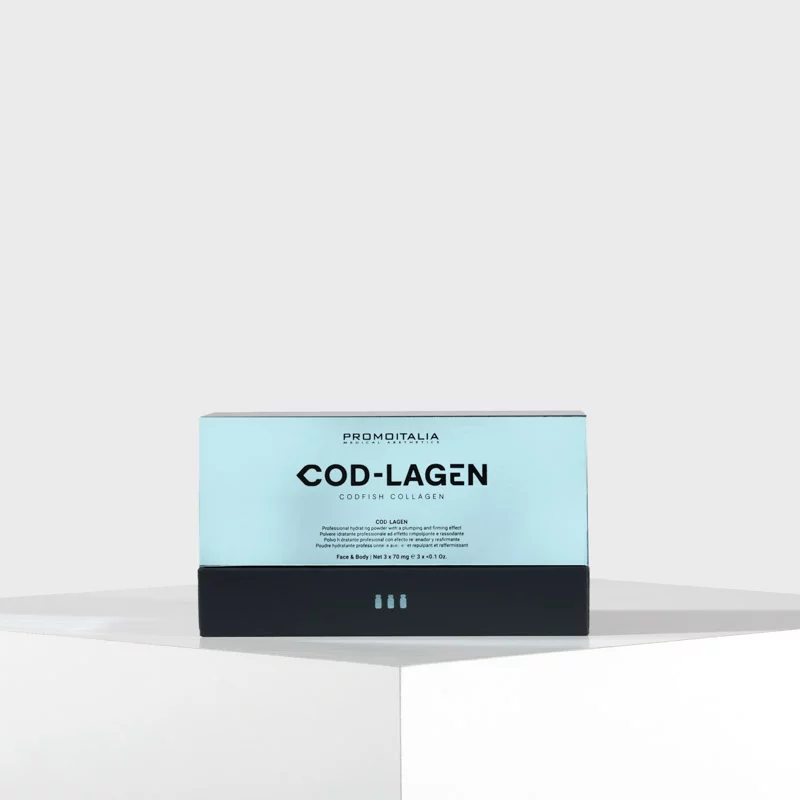
COD-LAGEN embodies
these strengths, positioning marine collagen as the future of regenerative
treatments.
Clinical
Evidence Supporting Collagen in Aesthetics
In a clinical
evaluation of 42 patients aged 25–65, COD-LAGEN demonstrated:
- Significant improvement in firmness,
elasticity, and hydration
- Noticeable rejuvenation sustained even 30
days post-treatment
- Zero adverse events, highlighting its high safety profile
These results confirm
what regenerative aesthetics has long suggested: collagen is not only
fundamental but clinically effective in reversing signs of aging.
From
Structure to Skin Quality
Ultimately, collagen’s
value lies in its ability to connect structural integrity with visible
results. Firmer, more elastic skin not only looks younger but also
functions better as a protective barrier. With innovations like COD-LAGEN,
physicians can now offer treatments that restore the skin’s architecture
while delivering the qualities patients desire most: smoothness, hydration, and
long-term vitality.
.webp)
.webp)
.webp)